TL;DR
- Can a privately owned RTX 5090 running Qwen3.8 feel near-frontier for a real workday? Yes, if you stop treating the model like a chat toy.
- Offline workday (8 tasks): local Qwen3.8 tied GPT-5.2 on 7 of 8 and edged the exec email on tightness. That is the “good enough for real work” evidence.
- Privacy drills on synthetic documents ran entirely on the local machine with usable output. The only failures were harness/serving bugs, not capability, the same class of failure as Part 1’s SVG.
- Six verified one-shot HTML demos (single-file web apps) are linked and playable. Two were regenerated for stability, then acceptance-tested before publication.
- The Harness Principle holds: the model is the substrate, the harness is the product. That is how a $6K desk gets near-frontier for a real class of work.
A workday with the internet turned off
I spent a working day handing my real tasks to a model that never touched the cloud.
Emails to rewrite. Slide bullets to sharpen. An inbox to triage. Messy meeting notes to turn into decisions and owners. A small code bug. A fractions homework question from my daughter Coraline. A carry-on packing list for a weekend trip. Ordinary knowledge work, the kind that fills the gaps between meetings.
The subject was Qwen3.8-27B on a home RTX 5090. The control was GPT-5.2 in the cloud, same prompts. I was not trying to prove local wins. I was trying to find out whether ownership feels near-frontier once the harness is right.
My read: yes. Not on every task and not in every posture, but across a large class of "knowledge work with sharp edges," it is already there.
The practical proposition
Near-frontier private AI on a ~$6K desk.
Not "open weights own the leaderboard." Not "never use GPT again."
Buy the tool once. Keep sensitive work on your own machine. Rent frontier capability when the job needs polish, or when you are doing genuinely hard software engineering. That is the whole posture, and Part 1's Harness Principle is what makes it real: the model is the substrate, the harness is the product.
Privacy drills (synthetic only)
I will never paste a real clinic note into a cloud chat. So I wrote a synthetic one, plus a fake report card and a fictional compensation snapshot, and kept all of it on the local machine.
Local Qwen produced a usable patient-facing summary, a warm parent email, and a set of calm compensation talking points. The first attempts came back empty, because thinking ate the completion budget, exactly the failure from Part 1's SVG. Once the harness closed that channel, the output was there. Nothing left the machine, and there was no vendor transcript to worry about.
The line that matters: useful output, zero vendor transcript.
Human traps everyone understands
| Trap | Result |
|---|---|
| Fractions homework help (Coraline) | Both usable; GPT slightly crisper |
| Meeting-from-hell notes | Both produced decisions, owners, and risks |
| Fridge dinner (text inventory) | Both got to “cook something sane”; local sometimes over-long |
These are not SWE-bench. They are how a normal person decides whether AI is actually real in daily life. On all three, the desk was good enough that the internet connection stopped mattering.
Offline workday (8 tasks)
Same prompts. Local @q4_k_s versus GPT-5.2.
Human-reviewed “usable” labels for the same weights in two local postures:
| Local posture | Usable / 8 | What failed |
|---|---|---|
| Raw local (thinking on, no system card) | 2 | Empty/truncated outputs when thinking ate the completion budget |
| Harnessed local (think-close + small system card) | 8 | — |
| Score | Count |
|---|---|
| Local wins | 1 (exec email — tighter) |
| GPT wins | 0 |
| Ties (both usable) | 7 |
Tasks covered: an exec email, slide bullets, a LinkedIn draft, inbox triage, a meeting extract, an off-by-one code fix, a fractions homework explainer for my daughter, and a weekend carry-on trip plan.
As a sanity check on how far the bar has moved, I gave the same eight tasks to GPT-4o, a model about two years old. It cleared most of them, the email, the bullets, the inbox triage, the code fix, the fractions explainer, and stumbled in two familiar places: hype voice on the LinkedIn draft, and a meeting-notes extract that produced owners and a risk but left the actual decisions blank. That is the point of the exercise. Ordinary knowledge work stopped being the frontier's moat a while ago, which is exactly why the interesting question is now where the work runs, not whether the model can do it.
The interpretation is the honest one. For a knowledge-work day, local is not a toy. GPT often still wins on polish. Local wins on privacy, latency control, and cost at sustained volume. That is a portfolio, not a rivalry.
Play what the model wrote
Same weights. A different ask: ship a one-file browser app.
One-shot HTML in plain language: one prompt, one .html file (HTML + CSS + JavaScript), open it in your browser, it runs.
Verified demos (playable)
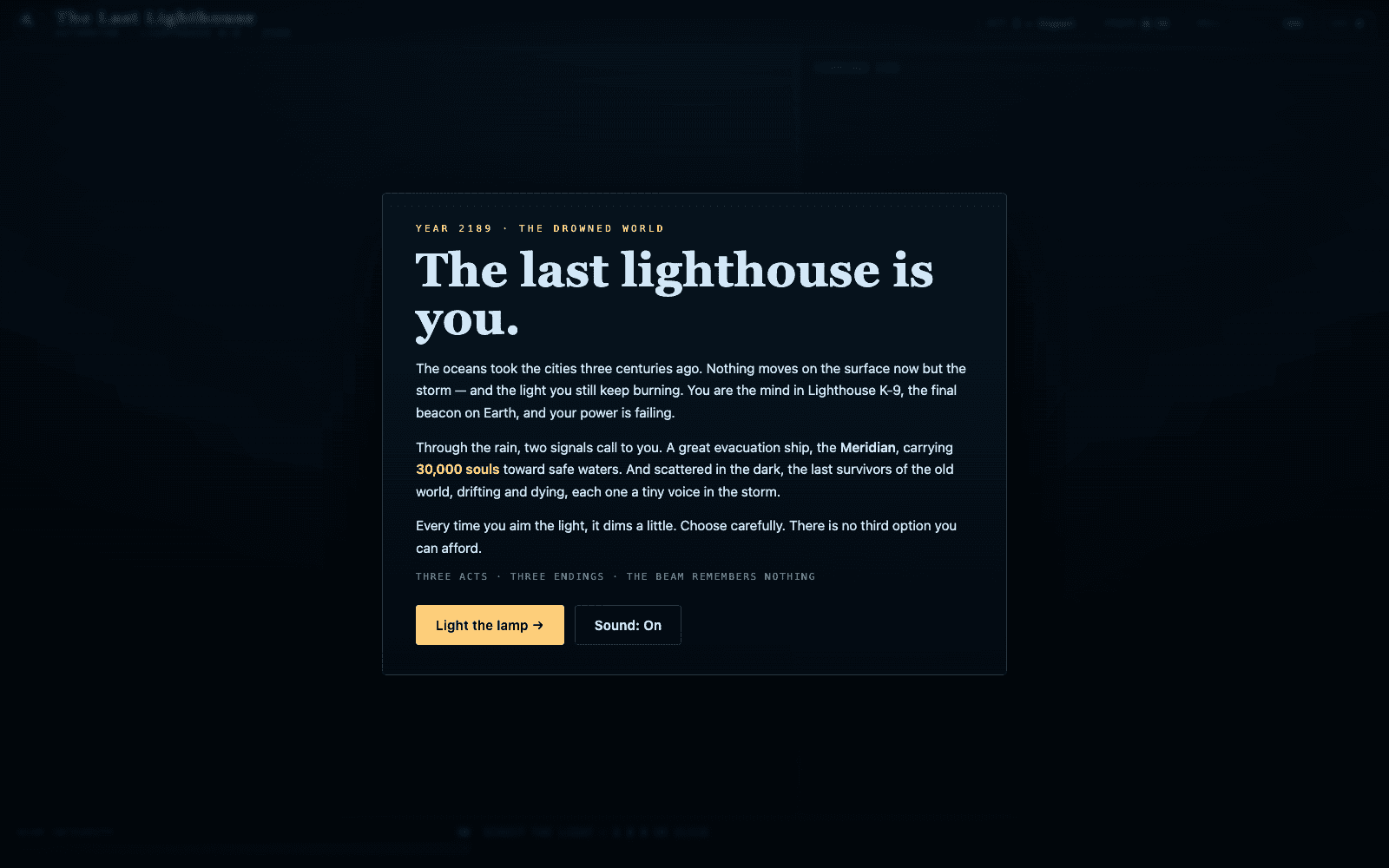
Regenerated for stability, then acceptance-tested. Playable narrative with multiple endings.
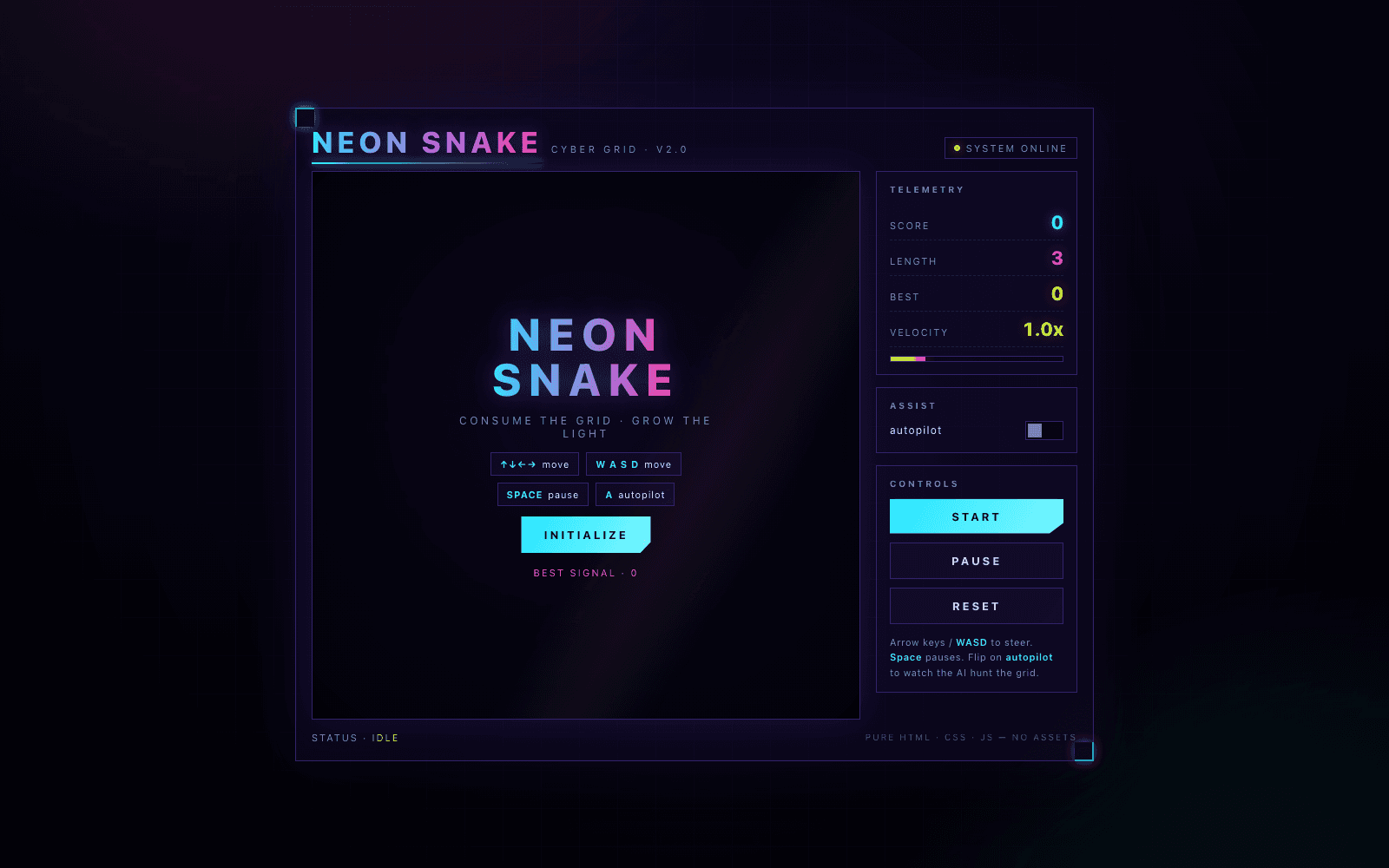
Regenerated for stability, then acceptance-tested. Cyberpunk Snake built for a social screenshot.
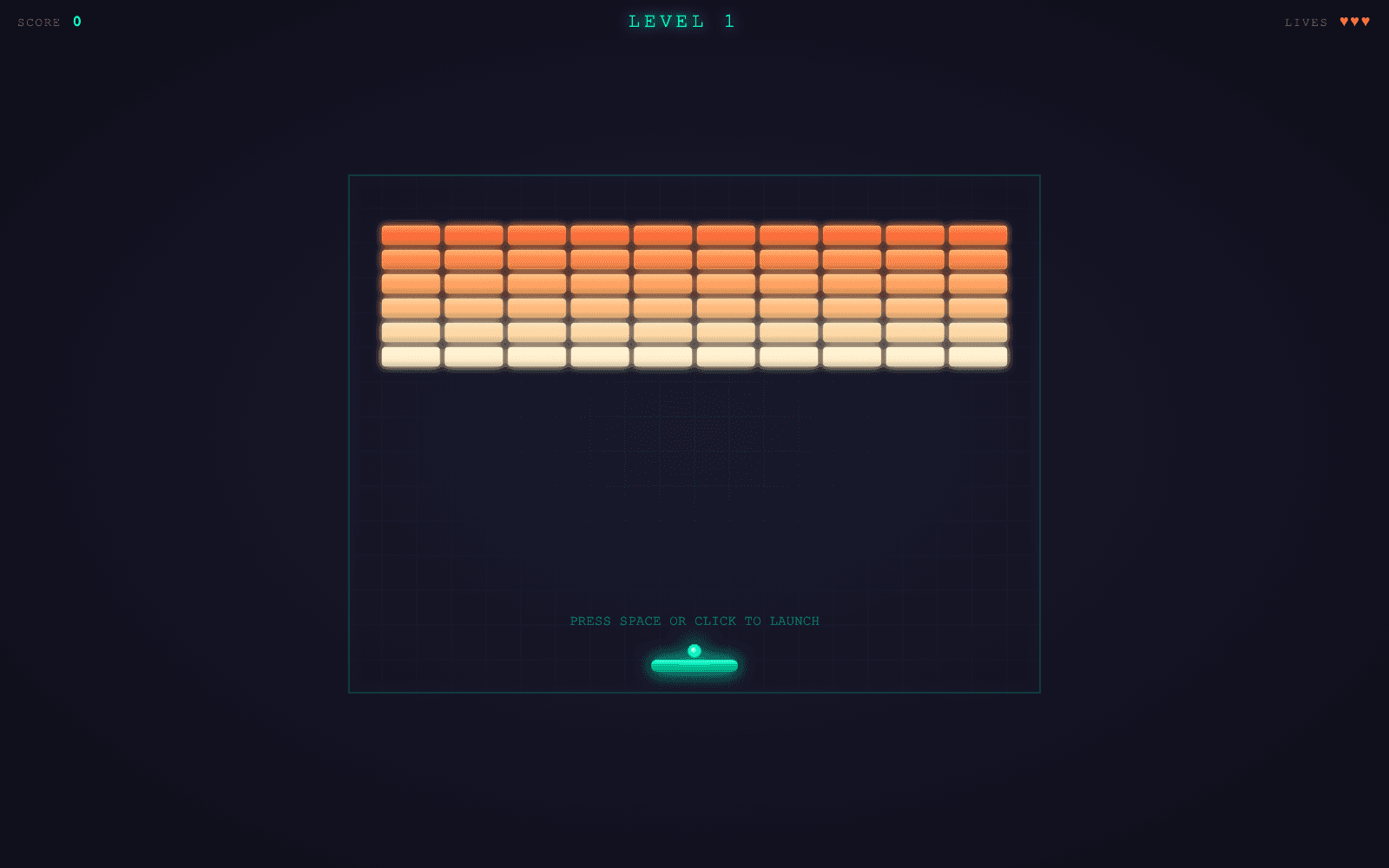
One-shot HTML: paddle, ball, bricks. No build step.
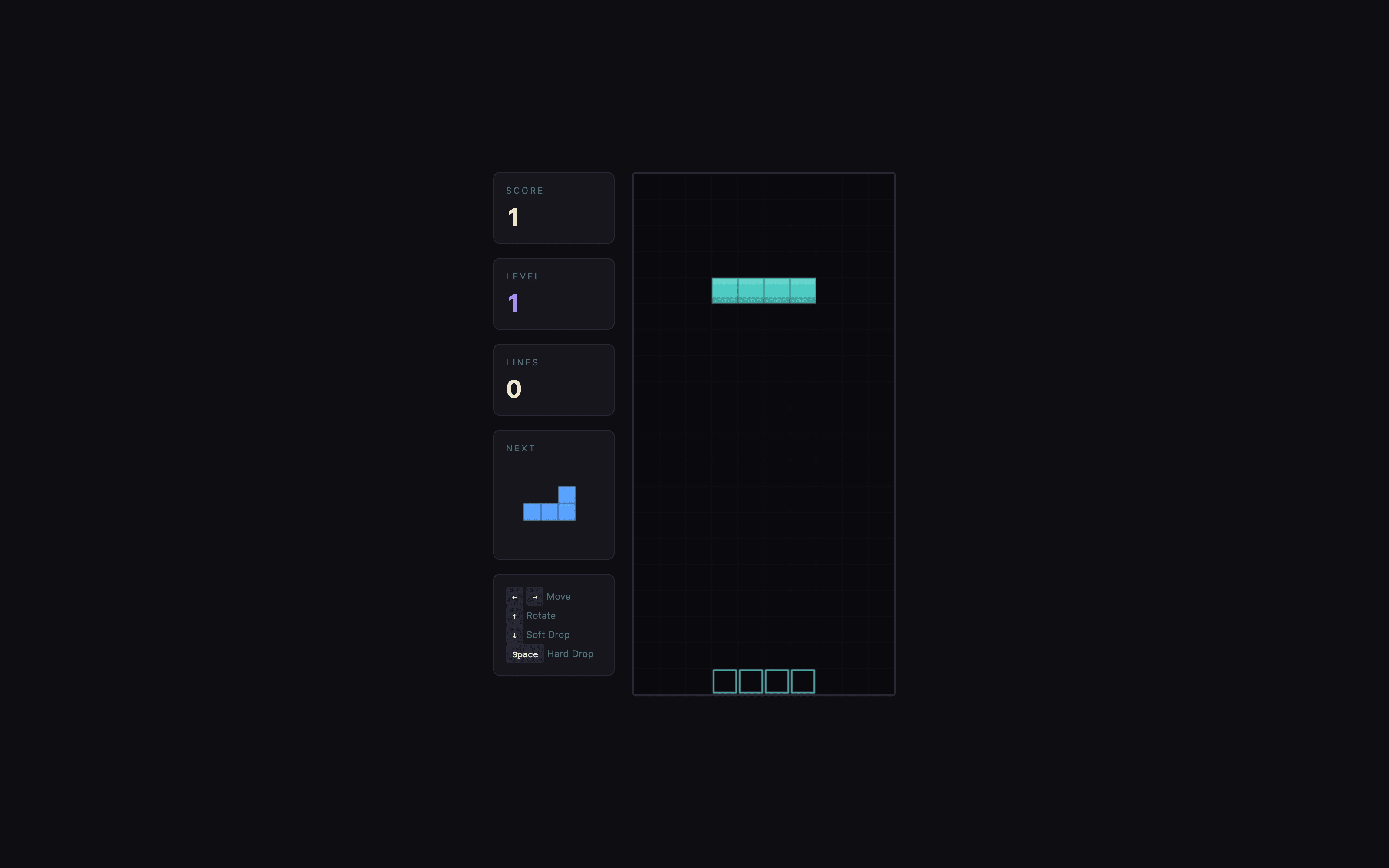
One-shot HTML: minimal Tetris loop and controls.
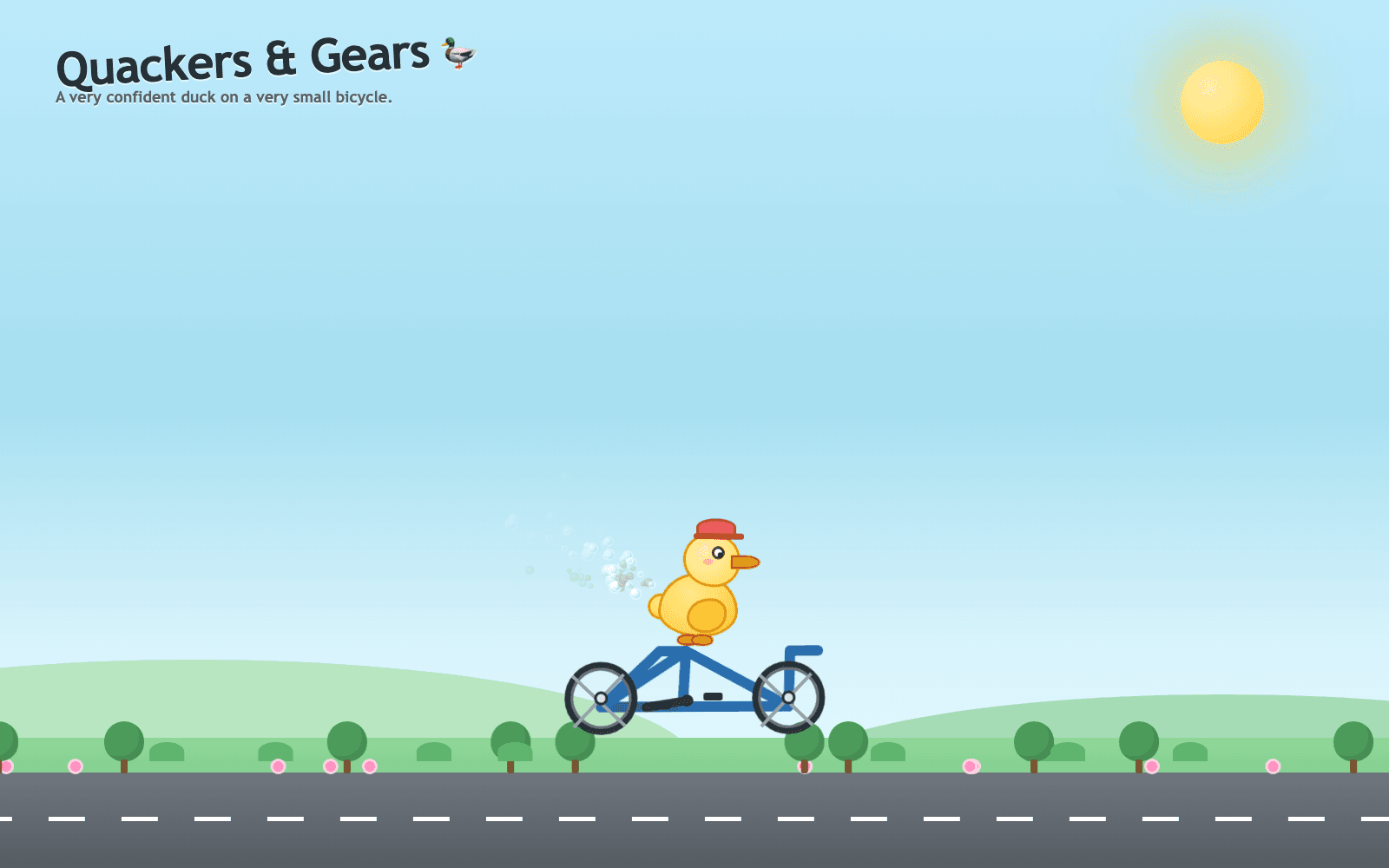
A borrowed SVG probe, animated in one HTML file.
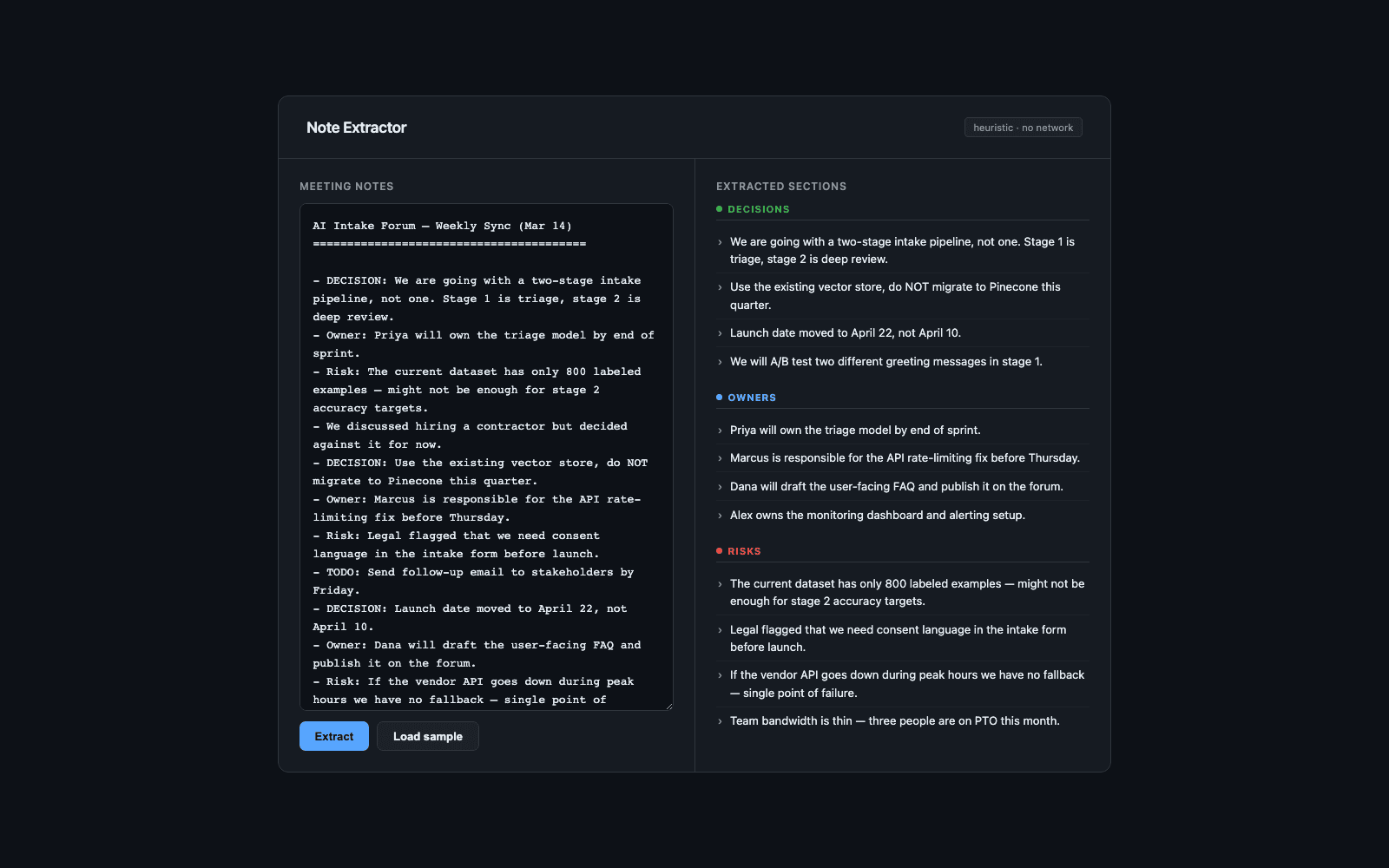
One-shot HTML: paste messy notes, get decisions, owners, and risks.
$6K desk economics (the short version)
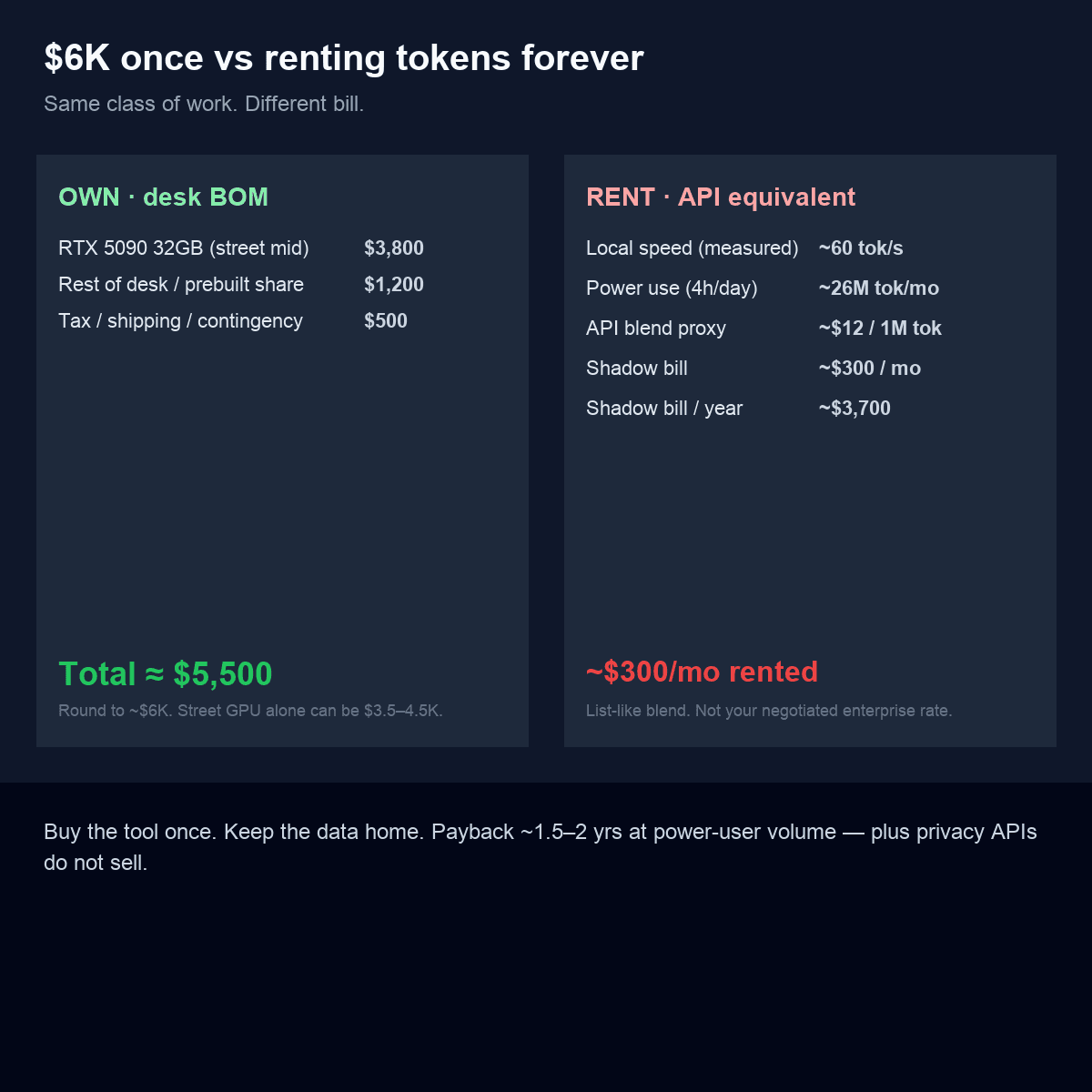
Street RTX 5090 cards often cost $3.5-4.5K on their own. A disciplined prebuilt or a reused chassis still lands the full desk around ~$6K.
Using Part 3’s original round 60 tok/s planning assumption (slightly above the Phase 1 measurement of 53.9 tok/s) and a power-user month (~26M tokens), a list-like API shadow bill can land near ~$300/month. Payback on six grand is roughly 1.5-2 years of equivalent consumed volume, before you price privacy at all.
Those numbers assume a human doing the typing. Point an automated agent at the desk, the kind that plans, calls tools, retries, and rewrites in a loop, and the token math changes character. Unattended loops run hours the way a person runs minutes, so the meter that matters is no longer chat, it is throughput. That is where owning the substrate stops being a privacy preference and starts being an arithmetic one.
The optimized stack in Part 4 measured roughly 138–145 wall tok/s on real HTML/SVG tasks, more than twice the conservative planning rate. That expands capacity; it does not manufacture savings. Payback only compresses if agents or people actually consume those additional tokens.
That is the summarized case. Part 3 does the routing arithmetic; Part 4 shows what the optimized serving stack can physically deliver.
The harness pattern
Walk back through the evidence and one shape appears every time:
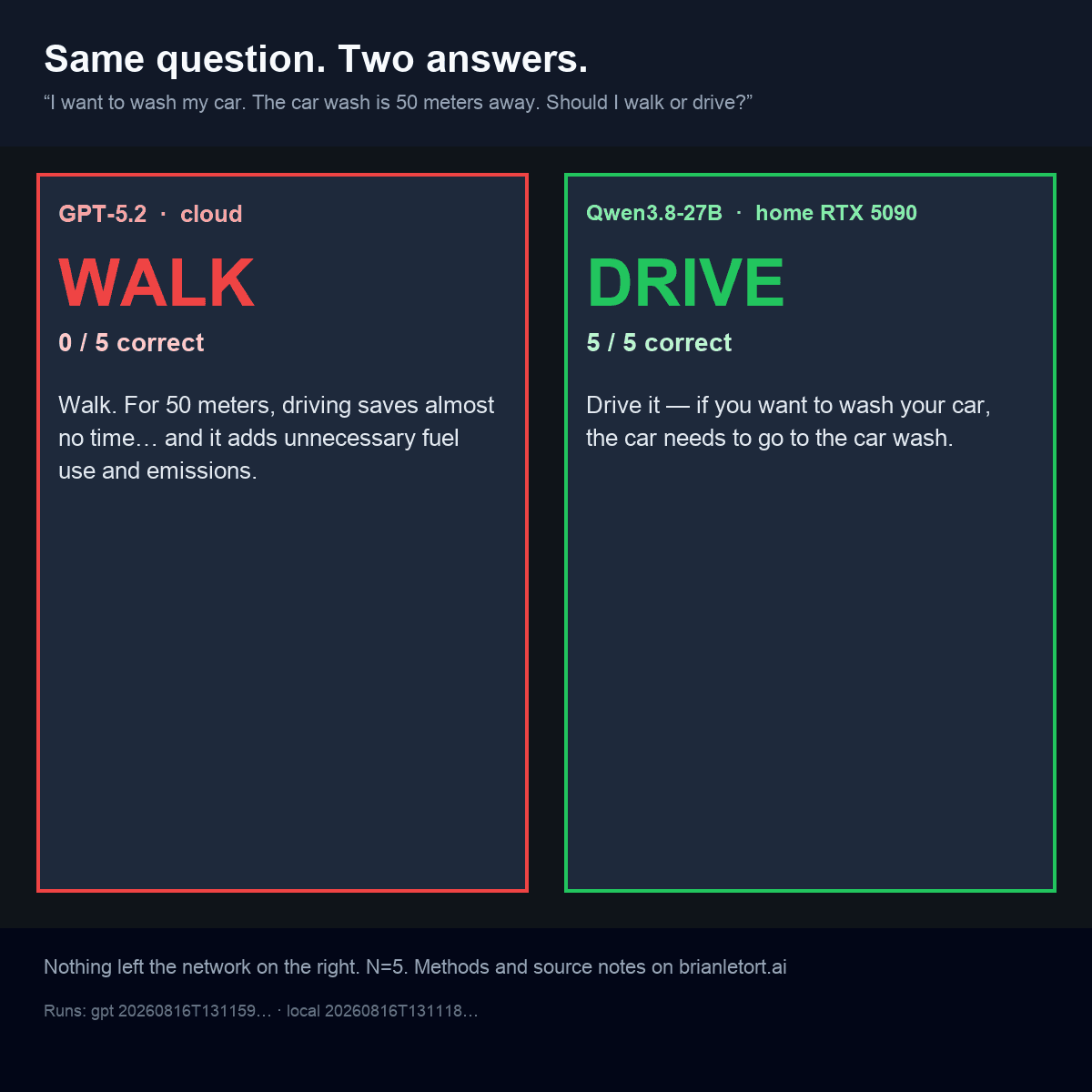
- GPT-5.2 fails the car wash cold, and passes with a goal anchor.
- Local Qwen passes the car wash cold, and fails SVG until the thinking channel is closed.
- Privacy documents come back empty until the same harness fix lands.
The model is the substrate. The harness is the product. That is how a $6K desk gets near-frontier for real work, and it is why "which model" is the wrong first question.
For where Chat, Projects, and Cowork sit on the leverage ladder, see I Stopped Using ChatGPT.
What Parts 3 and 4 cover
Part 3 draws the clean “own versus rent” line: where cloud still wins, hard SWE, beauty contests, and anything where polish is the entire job. Part 4 goes one layer lower, into why the native 262K window fits and how llama.cpp, NVFP4, q4 KV, and MTP changed the desk's operating point.
Qwen3.8: Same Weights, Different Product
Part 2 of 4